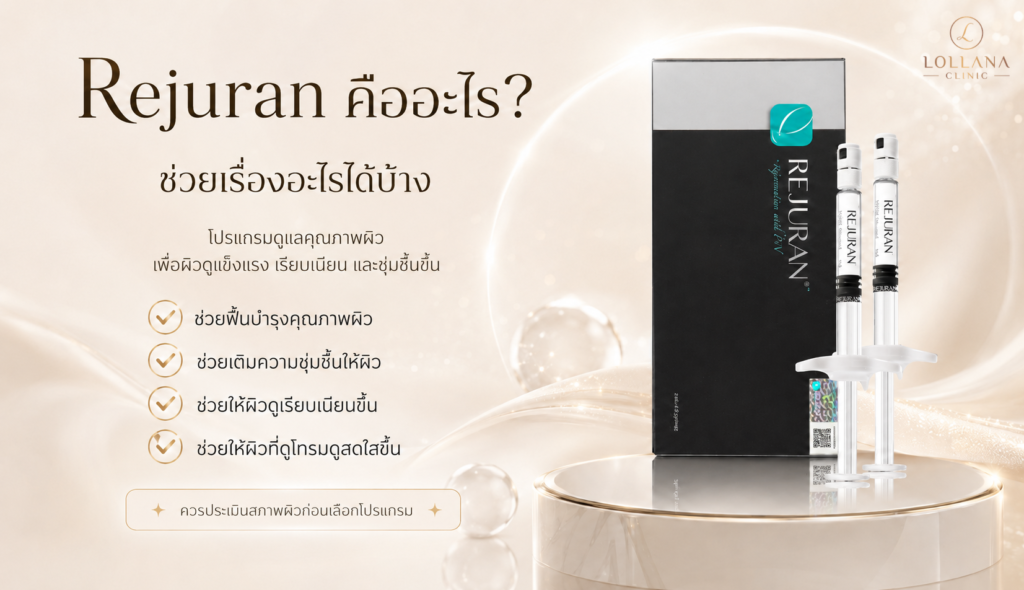
Rejuran A skin rejuvenation treatment designed to help the skin appear smoother, plumper, and healthier.
Dull, dry skin, enlarged-looking pores, fine lines, or a lack of radiance may not be caused by external skincare alone. These concerns can also be related to each individual’s overall skin quality, moisture levels, elasticity, and natural recovery process.
Rejuran It is one of the skin-quality treatments gaining attention in the Skin Booster category. The treatment focuses on gradually supporting the skin to appear healthier, smoother, and better able to recover. It is suitable for those who want to improve overall skin quality rather than make a noticeable change to facial contours.
At LOLLANA CLINIC Choosing an appropriate skin treatment begins with an assessment of the individual’s skin condition, specific concerns, medical history, and personal goals. This allows the treatment plan to be tailored appropriately, rather than selecting a program based solely on trends or a product name.
If you are unsure whether Rejuran is suitable for your skin condition, you can contact LOLLANA CLINIC for an initial assessment.
What is Rejuran?
Rejuran is a Skin Booster / Skin Quality Treatment that uses polynucleotides (PN). Its primary active ingredient is polynucleotide (PN), which consists of short fragments of nucleic acid, or DNA fragments, that are extracted from salmon and undergo a high-level purification process. Salmon is used as the source because research indicates that salmon-derived DNA has a high degree of biocompatibility with human tissue. The manufacturing process is also designed to reduce the risk of allergic reactions caused by residual proteins.
The manufacturer uses a proprietary technology known as DOT™ (DNA Optimizing Technology) to produce molecules with a consistent size that is suitable for use in skin-quality treatments.
According to information from the Rejuran product source, the Healer, i, and s formulations primarily contain long-chain polynucleotides derived from natural sources. PN has water-binding properties and may help create an environment that supports overall skin condition.
In clinical use, Rejuran is available in several formulations, such as:
| Product | General Use |
|---|---|
| Rejuran Healer | Used across the overall facial area to support skin quality. |
| Rejuran i | Used on areas with thinner skin, such as around the eyes. |
| Rejuran s | Used on depressed scars or localized areas of skin depression. |
| Rejuran HB Plus | Formulated to help reduce discomfort during treatment and enhance skin hydration, according to the product information. |
However, the appropriate product type, dosage, and treatment area should be assessed on an individual basis, as each person’s skin concerns are different.
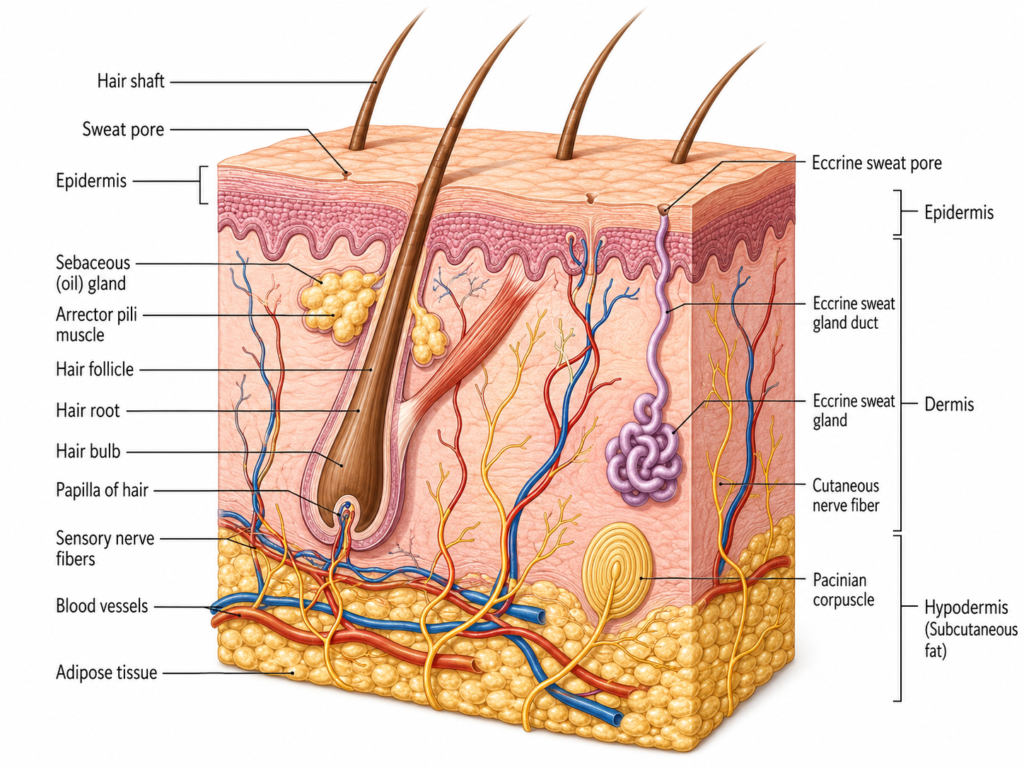
Image caption: Illustration of the skin’s structure, with particular emphasis on the dermis—the key layer associated with fibroblasts, collagen, elastin, and the skin’s natural regeneration processes.
Mechanism of Action
Rejuran does not work by directly adding volume in the same way as hyaluronic acid (HA) fillers. Instead, it focuses on supporting skin quality through polynucleotides, which academic reviews suggest may be associated with improvements in skin elasticity, overall skin quality, hydration, and a smoother skin appearance.
Put simply, Rejuran is intended to help create a skin environment that is more supportive of the skin’s natural recovery processes, such as:
1. Stimulates fibroblast activity
Fibroblasts are important cells found in the dermis. They are responsible for producing collagen, elastin, and other substances that help maintain the skin’s structure and condition. As we age, fibroblast activity tends to decline. Academic literature suggests that the key components in Rejuran may help support fibroblast activity, thereby promoting collagen production through the body’s natural biological processes.
2. Acts as a biological scaffold (Scaffold Effect)
The key components in Rejuran have a structure that may provide a supportive framework for skin cells, helping facilitate the skin’s natural repair process. This can be compared to creating an organized scaffold that allows new cells to grow and connect more effectively.
3. Supports skin repair and helps reduce inflammation
Medical literature has discussed the properties of these active substances in relation to helping reduce inflammation and supporting tissue healing, which may contribute to improved long-term skin health.
4. Helps balance skin hydration
Improving the quality of the dermal layer may indirectly help the skin retain moisture more effectively. With ongoing treatment, the skin may appear more hydrated and radiant, with a softer texture.
In simple terms, Rejuran does not add volume like dermal fillers or relax muscles like botulinum toxin. Instead, it is designed to help “activate” and support the skin’s natural regeneration processes so they can function more effectively.
Key Benefits of This Treatment
- Focuses on improving overall skin quality
Suitable for those concerned about dull, dry, uneven skin or makeup that does not apply smoothly. - Not intended to directly alter facial contours
Rejuran is not designed to add volume like dermal fillers. Instead, it focuses on improving the overall appearance and quality of the skin. - Suitable for gradual skin improvement
Results are generally not immediate after treatment. Changes tend to develop gradually, depending on the individual skin response. - Available for several treatment areas
Rejuran product information describes its use in areas such as the face, around the eyes, and selected areas with uneven skin texture. - May be incorporated into a combined skin-treatment plan in certain cases
A survey of Korean dermatologists reported that PN treatments are often combined with certain laser or energy-based lifting procedures. However, the treatment plan should be tailored to each individual by a qualified healthcare provider.
Who Is Rejuran Suitable For?
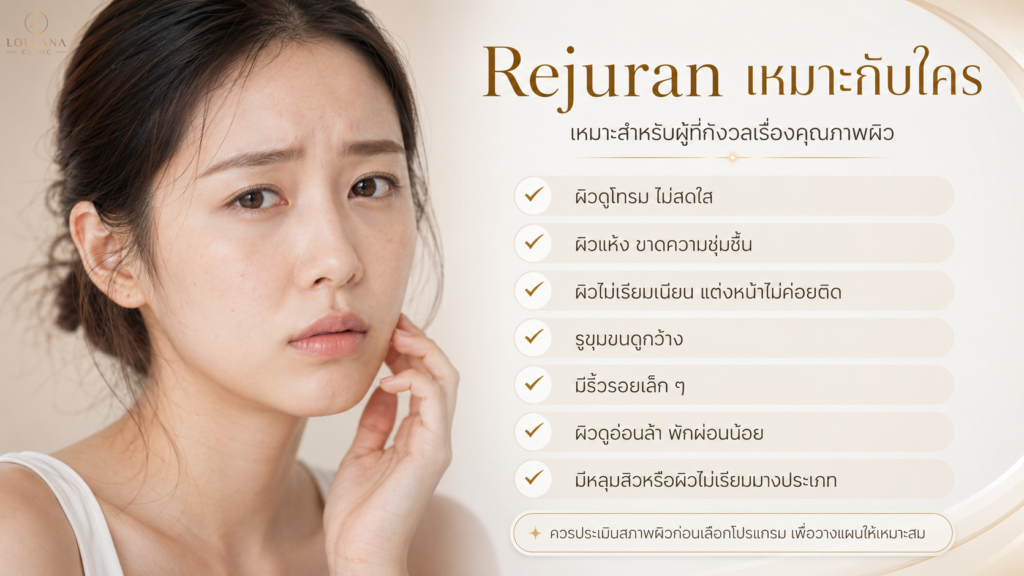
Rejuran may be suitable for individuals with the following skin concerns:
- Dull-Looking, Tired Skin
- Dry or dehydrated skin
- Uneven skin texture or makeup that does not apply smoothly
- Enlarged-looking pores
- Fine lines, particularly on the cheeks, forehead, or around the eyes
- Thin or fatigued-looking skin associated with insufficient rest
- Seeking gradual improvement in overall skin quality
- Certain types of acne scars or uneven skin texture, which may require assessment alongside other treatment options
According to a survey of Korean dermatologists, PN treatments are commonly used for concerns such as fine lines on the cheeks, under-eye and periocular areas, uneven skin texture, dry skin, and fine lines on the forehead.
For individuals with multiple skin concerns, a skin assessment is recommended before selecting a treatment program so that the care plan can be tailored more appropriately.
Who May Not Be Suitable for Rejuran, and What Precautions Should Be Considered?
Rejuran may not be suitable, or may require prior consultation with a qualified healthcare provider, in the following situations:
- Pregnancy or breastfeeding
- A history of allergy to certain substances or previous allergic reactions to injectable skin treatments
- Active infection, inflammation, rash, or an open wound in the treatment area
- Certain underlying medical conditions or the use of medications that affect blood clotting
- A history of hypertrophic scars, keloids, or skin that is highly prone to inflammation
- Expecting immediate results or a noticeable change in facial contours
- Seeking correction of deep folds or significant facial volume loss, which may be better addressed with another treatment option
Rejuran should not be selected based solely on trends or reviews. The injection area, dosage, technique, and the individual’s baseline skin condition can all affect the outcome and the recovery process after treatment.
What Skin Concerns Can Rejuran Help Address?
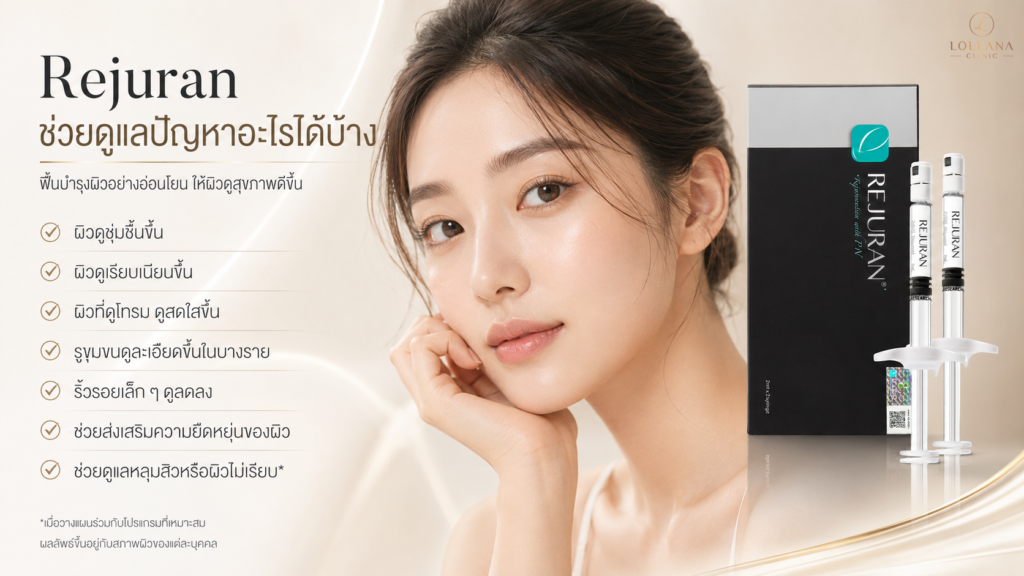
Rejuran may help support improvements in several aspects of skin quality, including:
- Helping the skin appear more hydrated
- Helping improve the appearance of skin smoothness
- Helping dull or tired-looking skin appear more refreshed
- Helping pores appear less noticeable in some individuals
- Helping reduce the appearance of fine lines
- Supporting skin elasticity
- Supporting the care of depressed scars or uneven skin texture when combined with an appropriate treatment plan
For acne scars, some studies on polynucleotides in the treatment of atrophic acne scars have reported positive outcomes. However, the type and depth of acne scars should be assessed individually, as certain types may require a combination of treatments, such as fractional laser, subcision, RF microneedling, or other skin boosters.
Common Treatment Areas
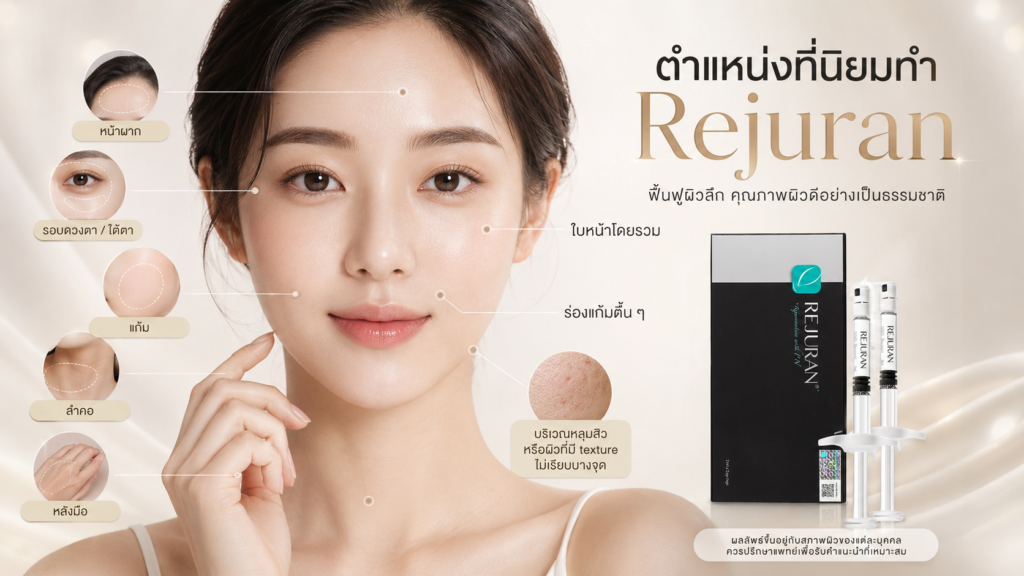
Rejuran is commonly used in the following areas:
- The overall face
- Cheeks
- Forehead
- Around the eyes or under the eyes, where appropriate
- Shallow nasolabial folds or areas with uneven skin texture
- Neck
- Backs of the hands
- Selected areas with acne scars or uneven skin texture
According to Rejuran product information, the treatment may be applied to various areas, including the face, décolleté, hands, and areas with thin skin. The appropriate treatment area depends on the specific product, injection technique, and individual assessment by a qualified healthcare provider.
Steps Before Receiving Treatment
Before undergoing a Rejuran treatment, the following steps are generally recommended:
- Assess the skin condition and primary concerns
This may include dryness, enlarged-looking pores, fine lines, acne scars, or uneven skin texture. - Review the medical history
This includes underlying medical conditions, current medications, drug allergies, previous reactions to injectable treatments, and a history of prior procedures. - Determine whether the treatment is appropriate
Some concerns may be suitable for Rejuran alone, while others may require a combination with additional treatments. - Receive the Service According to the Plan
Injection sites, dosage, and the number of sessions should be selected according to the individual’s skin concerns. The same treatment protocol should not be used for everyone. - Skin Preparation Before Treatment
This may involve cleansing the skin, applying a topical anesthetic, or following other preparation procedures according to the clinic’s protocol. - Verify the product before treatment
Patients should ask about the product name, source, and relevant product information before receiving treatment. Products used in clinics should be handled in accordance with applicable requirements and regulations in Thailand.
How to Care for Your Skin After Treatment
After a Rejuran treatment, appropriate aftercare can help reduce irritation and support the skin’s recovery.
- Avoid touching, picking, scratching, or massaging the treated area during the initial recovery period.
- Avoid makeup and potentially irritating skincare products for the first 24 hours, or follow the clinic’s specific instructions.
- Avoid heat exposure, including saunas, steam rooms, strenuous exercise, and strong sunlight, for the first 24–48 hours.
- Apply sunscreen and keep the skin well moisturized.
- Avoid alcohol during the initial recovery period, particularly if you bruise or swell easily.
- Contact the clinic for further assessment if pain, swelling, redness, warmth, rash, or any unusual symptoms do not improve.
Temporary effects such as redness, small raised bumps at the injection sites, localized swelling, or bruising may occur after treatment. Their severity and duration can vary depending on the individual’s skin condition, injection technique, and personal response.
How Soon Are Results Visible After Rejuran, and How Long Do They Last?
Rejuran results generally develop gradually rather than producing an immediate volumizing effect. Some individuals may begin to notice improved skin hydration or smoother makeup application within the first 1–2 weeks. Improvements in skin texture, elasticity, and fine lines may take longer and may become more noticeable after completing a series of treatments according to the recommended plan.
The duration of the results varies depending on several factors, including:
- Baseline skin condition
- Age and lifestyle
- Sleep and rest
- Sun exposure
- Post-treatment skincare
- Number of treatment sessions
- Any additional procedures performed in combination
Therefore, results should not be expected to follow a fixed timeline or last for the same duration in every individual. An individual assessment is recommended.
How many sessions are needed?
There is no single fixed treatment schedule for everyone receiving Rejuran. The number of sessions should be determined according to the individual’s skin condition, treatment area, product type, and skin-care goals.
Research and clinical-use data have reported different treatment protocols. For example, some studies used three sessions at two-week intervals, while a survey of Korean dermatologists found that a commonly recommended protocol was three sessions at four-week intervals. In practice, an initial plan may therefore consist of approximately three sessions, spaced 2–4 weeks apart. However, the schedule should be adjusted according to the healthcare provider’s assessment and each individual’s skin response.
Allowing time between sessions makes it possible to monitor the skin’s response and assess the gradual changes that develop after treatment.
After completing the initial course, additional sessions may be considered to help maintain the results where appropriate. However, there is currently no single standardized maintenance interval suitable for everyone, as existing studies vary in terms of the number of sessions, techniques, and treatment areas.
Timeline for Visible Results (Biological Timeline)
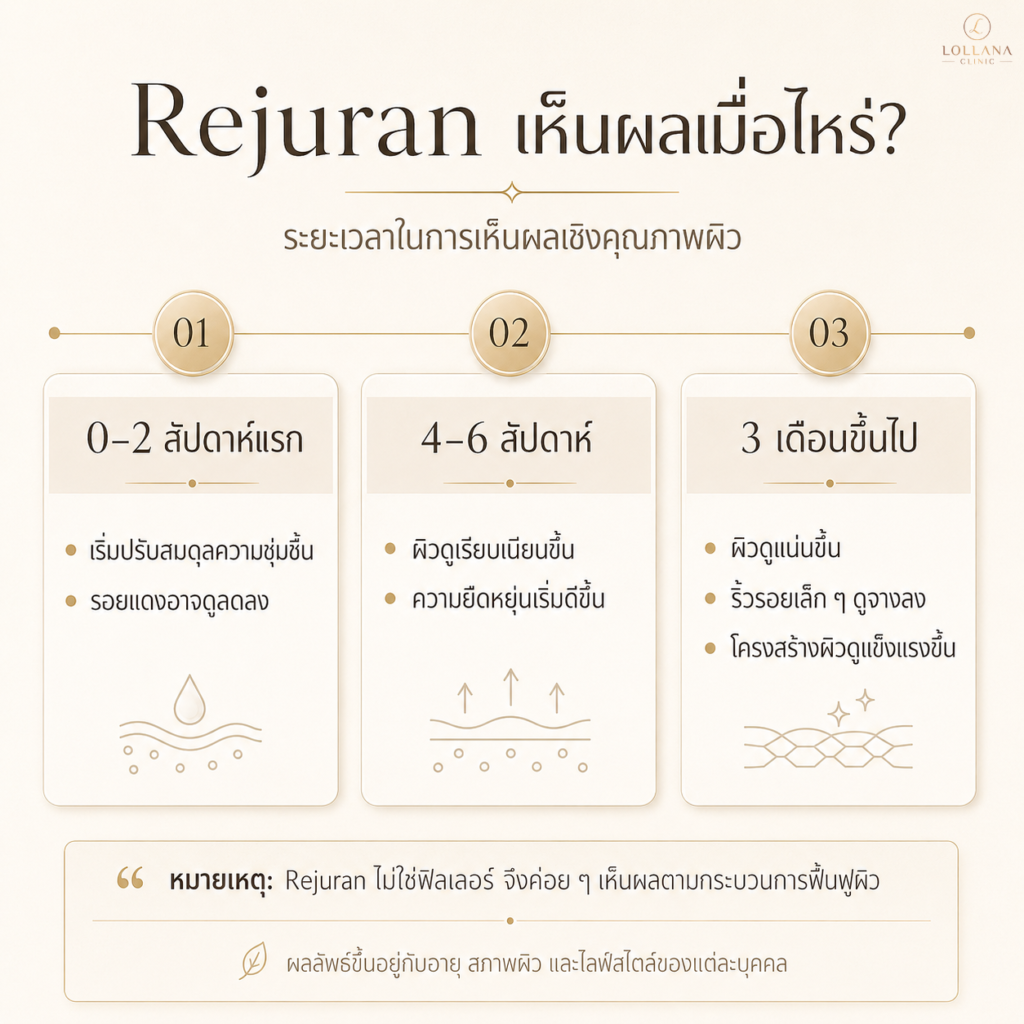
Research indicates that Rejuran is not a dermal filler and therefore does not produce an immediate volumizing effect. Instead, it focuses on gradually improving skin quality, with changes developing according to the body’s natural biological processes, as follows:
| Timeframe | Changes Observed in Research |
|---|---|
| First 0–2 weeks | Initial phase: Skin hydration may begin to improve, while redness associated with inflammation may gradually decrease. PN has been studied for its potential anti-inflammatory properties. |
| 4–6 weeks | Progressive phase: Changes in skin texture may begin to become noticeable. The skin may appear smoother, and elasticity may gradually improve as skin-remodelling processes develop. |
| From 3 months onward | More noticeable phase: Improvements in dermal quality or density may become more apparent. Fine lines may appear less noticeable, and the overall skin structure may look healthier and more resilient. |
Results may develop sooner or later depending on age, baseline skin condition, treatment plan, and lifestyle factors such as smoking and sun exposure.
Comparison with Similar Treatments
| Program | Category / Key Ingredient | Suitable For | Expected Results | Notes |
|---|---|---|---|---|
| Rejuran | Polynucleotide / PN | Dull or dry skin, enlarged-looking pores, fine lines, and uneven skin texture | Skin may gradually appear smoother, more hydrated, and improved in overall quality | Not primarily intended for adding volume |
| Juvelook | PDLLA + HA | Acne scars, enlarged-looking pores, and uneven skin texture | Skin texture and overall skin quality may improve in some individuals | Often focuses on skin texture and selected acne-scar areas |
| Sculptra | PLLA Biostimulator | Loss of skin firmness or age-related structural laxity | Skin may gradually appear firmer, tighter, and improved in overall quality | Suitable for long-term treatment planning |
| Radiesse | CaHA Biostimulator | Skin laxity, reduced firmness, or areas requiring greater definition | Skin may appear firmer and more defined in selected areas | The treatment area must be assessed carefully |
| Filler HA | Hyaluronic Acid Filler | Deep folds, facial volume loss, or localized areas requiring augmentation | Helps restore volume and enhance selected facial contours | Not in the same treatment category as Rejuran |
| Botox | Botulinum toxin | Dynamic wrinkles caused by muscle movement, such as forehead lines and crow’s feet | Helps soften the appearance of movement-related wrinkles | Works through a different mechanism from skin boosters |
Summary: No single treatment is suitable for every skin concern. Rejuran is primarily used to support overall skin quality, while other treatments may be more appropriate for specific concerns such as volume loss, deep folds, acne scars, or skin laxity.
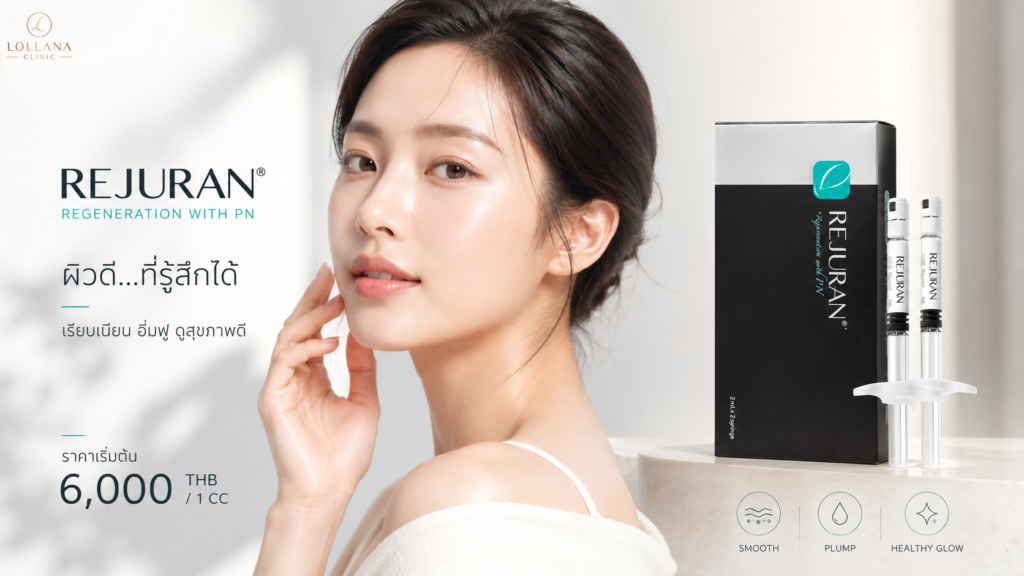
Rejuran treatments start from THB 6,000.
The price may vary depending on the product formulation, dosage, treatment area, and the care plan tailored to each individual. A skin assessment is recommended before treatment to determine the most appropriate approach for your specific skin concerns.

FAQ
Does Rejuran hurt?
During treatment, you may feel mild pain, stinging, or a brief pinching sensation, particularly in areas where the skin is thin, such as under or around the eyes. A topical anesthetic or other techniques may be used to reduce discomfort, depending on the clinic’s protocol.
How long does swelling last after Rejuran?
Some individuals may experience small raised bumps, redness, or localized swelling during the initial recovery period. These effects usually improve gradually, depending on the individual skin response. Contact the clinic if swelling or redness becomes more severe or appears unusual.
Can I wear makeup after treatment?
In general, makeup should be avoided for the first 24 hours, or according to the clinic’s instructions, to reduce the risk of irritation at the treatment sites.
How is Rejuran different from fillers?
Rejuran focuses on supporting skin quality, smoothness, hydration, and elasticity. Hyaluronic acid fillers are primarily used to restore volume or enhance specific facial contours. They are therefore intended for different types of concerns.
What age is Rejuran suitable for?
There is no fixed age requirement. Suitability should be based more on the individual’s skin condition, concerns, and goals than on age alone, such as dry or tired-looking skin, enlarged-looking pores, or fine lines.
Can Rejuran be combined with laser treatments?
In some cases, Rejuran may be incorporated into a treatment plan with lasers or other energy-based devices. However, the order of treatment, appropriate intervals, and suitability for the individual’s skin should always be assessed beforehand. Survey data indicate that some dermatologists use PN treatments in combination with lasers or energy-based devices, but this does not mean that the combination is appropriate for everyone.
Is Rejuran suitable for acne scars?
Rejuran may be considered for certain types of acne scars or uneven skin texture. However, acne scars vary in type and depth. Some cases may require a combination of treatments, such as subcision, laser therapy, RF microneedling, or other skin boosters.
How often should Rejuran be performed?
The number and frequency of sessions depend on the individual’s skin condition and treatment goals. Some survey-based protocols use approximately three sessions at intervals of around four weeks. However, an individual assessment should be performed before establishing a treatment plan.
Does Rejuran have side effects?
Temporary redness, swelling, bruising, small raised bumps, or localized irritation may occur in some individuals. These effects can be influenced by the injection technique, treatment area, and individual skin response. Contact the clinic promptly if you experience any unusual or worsening symptoms.
Are Rejuran results immediate?
Immediate volumizing results should not be expected. Changes usually develop gradually according to the skin’s response, and a series of treatments may be recommended as part of an individualized plan.
Does Rejuran make the face look permanently younger?
Rejuran should not be described as producing permanent results or permanently making the face appear younger. It is a skin-quality treatment, and the results depend on the baseline skin condition, individual response, and ongoing skincare.
Is Rejuran suitable for everyone?
No. Rejuran is not suitable for everyone. Individuals who are pregnant or breastfeeding, have an active infection in the treatment area, have a history of allergies, or have certain underlying medical conditions should consult a qualified healthcare provider before treatment.
Summary
For concerns such as tired-looking or dry skin, enlarged-looking pores, fine lines, or uneven skin texture, you can contact LOLLANA CLINIC for a skin assessment and an individualized treatment plan.
Results vary depending on the baseline skin condition, specific concerns, and individual response. An assessment should be completed before receiving treatment.